Do You Really Need to Rinse Every Type of Rice the Same Way?
Some rice varieties need rinsing to cook up fluffy and separate‚ while for others too much rinsing removes the starch that gives the dish its texture.
Whether you really need to rinse every type of rice the same way is a question that shows how much the type of grain affects the cooking process. Some rice varieties have an outer layer of starch that is best removed before cooking to get a fluffier texture. Other varieties‚ by contrast‚ give a better result when some of the starch stays on the surface of the grains. That is why rinsing all types of rice in the same way is not always the best way to prepare a dish. Understanding the differences between varieties makes it possible to choose the right preparation method.
How Rice Varieties Differ in Grain Structure
Different rice varieties differ in the physical structure of their grains and in the amount of natural starch they contain. Long-grain rice‚ for example‚ usually has less surface starch and therefore tends to stay separate after cooking. Shorter varieties‚ on the other hand‚ often have a higher concentration of starch. This makes them stickier after cooking. These differences also affect whether it is worth rinsing the grains before cooking.
Rinsing to Remove Excess Starch
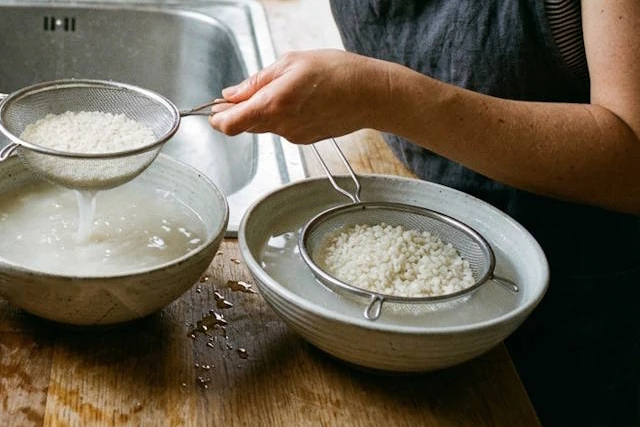
When rice is rinsed in water‚ some of the starch on the surface of the grains is released into the water. This can prevent the grains from sticking together during cooking. That is why‚ for dishes that call for fluffy‚ separate rice‚ the grains are usually rinsed several times. This is generally done until the water runs clearer. Rinsing affects the final texture of the dish.
Rice Types Where Starch Is Welcome
In some dishes‚ the sticky texture of the rice is an important part of the desired result. In certain dishes from Asian cuisines‚ for example‚ stickiness allows the grains to cling to each other. In such cases‚ rinsing for too long may remove the starch needed for the right texture. That is why the preparation method changes according to the dish being planned. Understanding these differences makes it possible to match the rinsing to the culinary goal.
The Effect of Rinsing on Cooking Time
When rice is rinsed well before cooking‚ some of the surface starch is removed‚ so the grains behave differently as they heat up. In some cases‚ this may also affect the cooking time and the amount of water needed. Grains with less starch on them may absorb liquid differently. That is why rinsing affects not only the texture but also the cooking process itself. Understanding this connection makes it easier to control the final result.
Summary
Rinsing rice before cooking is not a single method that suits every type of rice in the same way. The differences between varieties affect the amount of starch and the texture you want in the finished dish. In some cases thorough rinsing helps create a fluffier texture‚ while in others it can spoil the desired texture. That is why it is important to match the preparation method to the type of rice and the culinary goal. Being aware of these differences helps you achieve a more precise result in the kitchen.