Why Do Onions Cook Differently in the Pan Depending on How You Cut Them?
The way an onion is cut decides how much of it touches the heat‚ how fast it softens and how its natural sugars caramelize in the pan.
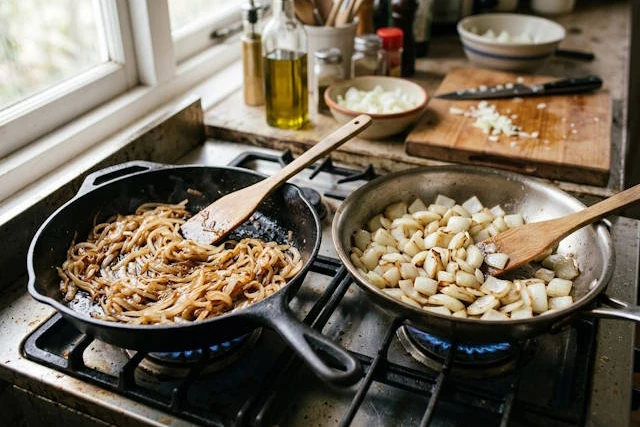
Why onions cook differently in the pan depending on how you cut them is a question that shows how much cutting technique affects the cooking process. An onion is made up of thin layers that contain water‚ natural sugars and various aromatic compounds. When heat acts on these layers‚ they soften and release the liquid inside them. The shape of the cut determines how much surface area is exposed to heat and how the layers break down in the pan. That is why a small change in the way an onion is cut can make a significant difference to the result.
The Structure of the Inner Layers
An onion is built from many layers arranged one inside the other in rings. Each layer contains water and compounds that react to heat during cooking. When an onion is cut in a certain way‚ some layers are more exposed to the direct heat of the pan. This exposure affects how quickly the onion softens and how its sugars caramelize. That is why the shape of the cut changes how the onion behaves while frying.
Surface Area in Contact with Heat
When an onion is cut into smaller pieces‚ its total surface area increases significantly. A larger surface area lets heat reach more parts of the onion quickly. As a result‚ the onion softens faster. Larger pieces‚ by contrast‚ heat up gradually and therefore soften more slowly. This difference also affects the final texture of the onion.
The Release of Natural Sugars
Onions contain natural sugars that react to heat through caramelization. When an onion is fried for a long time‚ these sugars change color and flavor and become sweeter. The shape of the cut affects the way the sugars are released from the inner layers. Thinner pieces allow a relatively quick process‚ while thicker pieces keep a firm structure for longer. That is why the choice of cut also changes the flavor profile of the dish.
The Texture of the Onion in the Finished Dish
Beyond flavor‚ the shape of the cut also affects the texture of the onion after cooking. Finely chopped onion tends to break down almost completely and melt into the dish. Thicker slices‚ on the other hand‚ may hold their shape even after long frying. The choice between cuts often depends on the texture you want in the dish. That is why many chefs are careful to choose the cut according to the type of dish.
Summary
The way an onion behaves in the pan depends largely on how it is cut and on the inner structure of its layers. A small change in cutting technique changes the surface area exposed to heat and the way liquids and sugars are released during cooking. This difference affects the texture‚ the flavor and the cooking time of the onion in the dish. Understanding the process makes it possible to use different cutting techniques to achieve a variety of culinary results. When cutting is treated as part of the cooking process itself‚ it becomes easier to control the final result.