Should Children Be Involved in Every Family Decision?
Children benefit from taking part in everyday choices and open conversation‚ while complex decisions and core responsibility stay with parents.
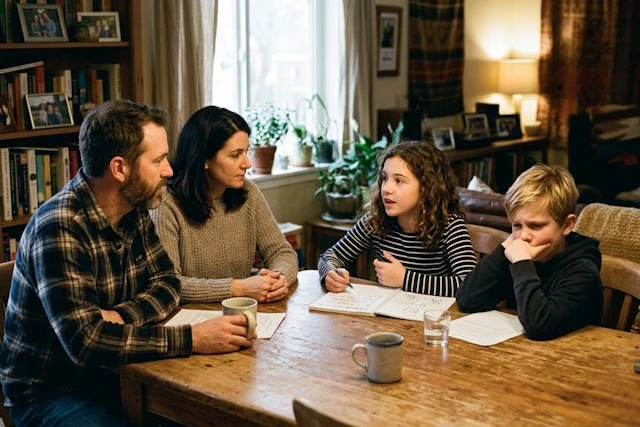
Whether children should be involved in every family decision is a question that highlights the balance between listening to children's opinions and parents' responsibility for running the home. Children sometimes enjoy the opportunity to express a view and feel that their opinion is heard within the family. At the same time‚ too many decisions or over-involvement in complex matters can cause confusion or a sense of responsibility that is not appropriate for their age. That is why many families look for a way to involve children to the right degree. Finding this balance is an important part of the parenting process.
The Limits of Responsibility in the Family
Every family has a certain division of responsibility between the adults and the children. Parents are usually responsible for making decisions that affect the overall structure of life at home. Children‚ on the other hand‚ can be involved in smaller decisions related to their own daily lives. This division allows children to feel like partners without carrying a burden of decisions that does not suit their age. Understanding the limits of responsibility contributes to stability in the family system.
The Value of Open Family Conversation
When families hold open conversations about different topics‚ children learn how to express an opinion and listen to others. Such conversation helps children understand that their views matter and that there is room to raise ideas or thoughts. At the same time‚ the conversation does not necessarily mean that every decision has to be made according to the children's opinion alone. The very opportunity to take part in the discussion can strengthen a sense of belonging to the family. Open conversation creates an environment in which children feel comfortable expressing themselves.
Small Decisions Versus Complex Decisions
Some family decisions concern everyday matters‚ such as choosing a shared activity or planning a meal. Decisions like these can be an excellent opportunity to involve children in the decision-making process. In contrast‚ more complex decisions may require a broad understanding of financial‚ professional or personal circumstances. In such cases‚ the responsibility usually stays with the parents. Distinguishing between types of decisions helps maintain the right balance.
A Sense of Security in Children
Many children need to feel that there is an adult who makes the main decisions in their lives. This sense of security allows them to feel that the family framework is stable and clear. When children are required to take part in every decision‚ they may feel overwhelmed or confused about their role in the family. That is why maintaining clear boundaries sometimes actually contributes to calm and stability. The right combination of involvement and parental leadership creates a healthy balance.
In Summary
Involving children in family decisions can be an important tool for teaching responsibility and self-expression at home. At the same time‚ not every decision is suitable for children's full involvement. Keeping a balance between listening and parental responsibility allows children to feel part of the family without carrying an unnecessary burden. A measured combination of open conversation and clear boundaries creates a stable and respectful family system. This way‚ children can be involved in the process in a way that suits their development.