The Small Details That Give a Garden a Neat and Natural Look
A neat‚ natural garden comes from clear edges‚ the right mulch‚ well-placed irrigation‚ clear paths and repeated materials‚ not from decorations.
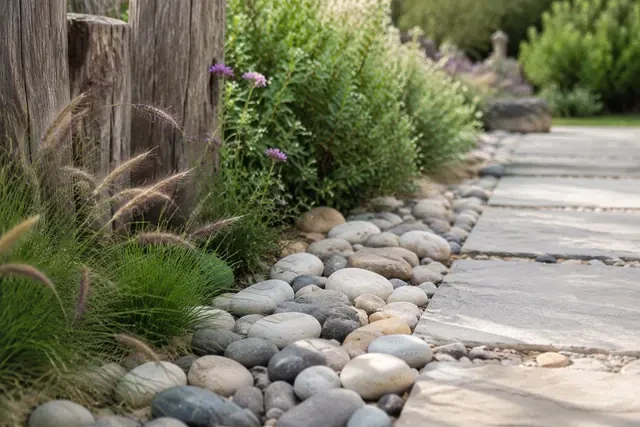
Using river pebbles in the garden can define an area‚ cover bare soil or soften the meeting point between a hard surface and planting. For the result to look natural‚ choose a size and shade that suit the scale and the materials already there. A layer that is too thin disappears and mixes into the soil‚ while a jumble of types and colors turns the surface into a sample board that pulls attention from the whole garden. Order in a garden is not the result of many decorations‚ but of a clear relationship between borders‚ surfaces and plants. When the eye understands where to walk‚ where the plants grow and where the equipment is kept‚ even a lush garden looks calm. The small details then play a double role: they solve an everyday need and at the same time strengthen the natural language of the place.
Clear Edges Without Rigid Lines
Edging keeps soil and mulch from spilling onto the path‚ but it does not have to stand out. A low metal strip‚ a sunken stone or suitable timber can hold the material in place and remain almost invisible. The choice depends on the slope‚ the amount of water and whether a cart or mower passes through. Curved lines suit a flowing garden‚ while straight lines reinforce an architectural look. There is no need to pick one style for the whole space‚ but the transitions should be deliberate. A random bend created only to get around a plant looks less natural than a wide curve that leads the eye. A good choice leaves room for growth and seasonal change. Plants‚ shade and furniture behave differently through the year‚ so breathing room and flexible planning matter more than a full look on the day of installation.
Ground Cover That Serves the Plants
Bare soil dries out‚ washes away and sprouts weeds. Organic or mineral mulch reduces some of these problems‚ but each material behaves differently. Organic material breaks down and improves the soil‚ while stone lasts a long time but can heat up. Around sensitive plants‚ choose according to their needs and not only by color. It is important not to pile mulch against the trunk. A small gap allows air to circulate and makes it easier to spot a problem. Before spreading‚ remove weeds and level gently‚ but don't compact the soil around the roots. The preparation decides whether the mulch stays tidy or mixes into mud after the first rain. It is worth linking aesthetics with movement. A beautiful detail that narrows a passage or makes cleaning harder loses its value‚ while a clear border or a small storage spot can improve the look precisely because it serves a use.
Irrigation Lines in the Right Place
A good irrigation system does not have to disappear completely‚ but it should be protected and accessible. A line lying across a path will get damaged‚ and one buried too deep will be hard to repair. It can run along the edging or under a light mulch that can be moved aside. It is worth marking connection points and valves. When a fault occurs‚ there is no need to take apart half the garden to find them. A small cover in a matching shade‚ or a plant that does not block access‚ keeps the look without giving up on maintenance. A short monthly check is sometimes enough to stop a problem early. A leak‚ a loose fitting‚ an invading weed or a material that is starting to fade are much easier to deal with before they affect a whole area.
Repeating One Material
A cohesive look comes from repetition. If a certain stone appears by the entrance‚ you can repeat it by a tree or in a small water corner. There is no need to use it everywhere. Two or three appearances create a connection and prevent the feeling that every corner was planned separately. The repetition can also be in color or texture. Wood in a similar shade in the furniture and the edging‚ or black metal in a light fixture and a bed border‚ tie the picture together. A limited selection of materials also makes future repairs and additions easier. Before making a change‚ it is worth observing the area at two different times of day. The direction of the light‚ the heat of the surface and the movement of air change during the day‚ and this check prevents a decision based on a single visit in pleasant conditions.
Paths That Guide Movement
A path is not just a surface. It tells people where to walk and where to stop. A consistent width‚ spot lighting and a clear connection to the door or seating area prevent shortcuts through the flower bed. When the path changes direction‚ give it a reason: a tree‚ a view or a point of interest. In a small garden there is no need for many routes. One good path and two places to pause are enough. Too many paths split up the space and shrink the planted areas. Order comes from deciding which route is the main one and which is left only for maintenance access.
Practical Items as Part of the Design
A faucet‚ an irrigation cabinet‚ a bin and tools are part of the garden even if nobody photographs them. When they are given a place‚ they stop getting in the way. A low box can serve as both storage and seating‚ and a side wall can take a tidy rack. Hiding everything completely is not always practical; a clean integration is better. Empty pots and leftover materials also need a decision. If they are meant for next season‚ store them together. If not‚ clear them away. A garden looks tidy when it has no items waiting around without a purpose. Clearing them frees up space for plants and highlights the materials that were chosen on purpose.
The View from the House
Most of the time the garden is seen from a window‚ a door or a seating area‚ and not only while walking along the path. It is worth standing at a few fixed points in the house and checking what is at the center of the view‚ which joints stand out and where practical equipment creates visual noise. Sometimes a small change in the angle of a pot‚ partly hiding an irrigation line or repeating an existing material improves the picture more than a new addition. The view from inside also helps plan seasonal interest‚ so that in both winter and summer there is at least one focal point that provides color‚ movement or depth.
In Summary
The natural‚ orderly feel is built at the edges‚ in the mulch‚ in the irrigation lines and in the paths. Subtle edging‚ repeated materials and easy maintenance access bring the garden together into one system. When every detail serves a use and also fits into the look‚ there is no need for a clutter of decorations. The garden looks complete because it is easy to understand and to move through. Observation in real conditions‚ maintenance that matches the time available and room for seasonal change create a yard that stays practical and calm even after the first excitement wears off.